About 58 minutes
The life of the departed — Text and Context
Theology
13,192 recorded words. 6 minutes difference from this book's estimate.
View Gutenberg source #72261
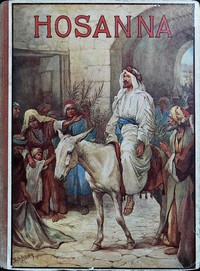
This digital edition of Hosanna — Story, Setting & Ideas is described by source-level measurements including 14,625 words, 1 hr 4 min estimated reading time, and 2 detected text sections.
The text analysis averages about 21.7 words per sentence, while the detected sections provide another way to judge how the source is divided.
Project Gutenberg metadata also associates the work with “Bible stories, English -- Juvenile literature,” connecting these edition facts with the source record’s subject description.
Explore this collection
These alternatives are selected using recorded categories and estimated reading time.
About 58 minutes
Theology
13,192 recorded words. 6 minutes difference from this book's estimate.
View Gutenberg source #72261About 72 minutes
Theology
16,501 recorded words. 8 minutes difference from this book's estimate.
View Gutenberg source #36402About 74 minutes
Theology
17,011 recorded words. 10 minutes difference from this book's estimate.
View Gutenberg source #56993Search stored excerpts and compare books → Choose by your preferences →
Choices use stored catalog measurements. Estimates vary with reading speed. A shared category is a catalog label, not a claim that two books have the same argument or literary quality.
Search reads excerpt text stored with this catalog and links to its associated Gutenberg record. The connection is stored in the site database; this tool does not recheck that every excerpt is word-for-word identical to that external record. Excerpt search does not cover every chapter and does not verify historical publication dates.
Catalog snapshot checked: 2026-09-26. Coverage: 94 public books, 94 available source excerpts.
Calculated from edition completeness, EPUB availability, text structure and catalogue metadata. Not a user rating.
Total of 100 points, scaled to a 2.5-5.0 range. Editions with an empty description or a missing EPUB file are not scored.
Public-domain source text
The source text is kept in the dedicated reader, separate from this catalogue record and its commentary.
The first chapter, 'Christmas,' immediately establishes a pattern of retelling a Gospel story—here, the shepherds and angels from Luke 2—then pivoting to a brief, true anecdote from the author's own experience. A child at a service recites a line from a hymn, 'Oh, come to my heart, Lord Jesus,' which becomes a model for the reader's response. This two-part structure—Scripture retold, then applied—recurs throughout the book, making each chapter a self-contained lesson.
Shaw frequently breaks the narrative frame to speak directly to her young audience. In 'The Lost Piece of Silver,' she opens with 'You see that woman?' and later asks, 'Perhaps you know yourselves how difficult it is to forgive?' in 'Ten Thousand Talents.' This technique creates a conversational tone, as if the author is sitting beside the reader. The questions are rhetorical but expect an internal response, guiding the child toward self-examination. The language is simple and repetitive, reinforcing key moral points without abstraction.
Shaw selects parables that illustrate forgiveness, compassion, and humility. In 'Ten Thousand Talents,' she retells the story of the unforgiving servant, then directly applies it: 'Now this brings us to ourselves.' She offers a practical prayer for readers struggling to forgive: 'Heavenly Father, I can't forgive So-and-so, but do help me to!' This move from ancient story to immediate, personal application is consistent. The parables are not left as abstract teachings; they become scripts for the child's own spiritual practice.
The prose is marked by short sentences and parallel structures. In 'Christmas,' the angel's message is given in direct speech: 'Glory to God in the highest, and on earth peace, good will toward men.' Shaw then repeats the shepherds' response: 'The Lord has made known to us a wonderful thing—let us go to Bethlehem.' This rhythmic repetition aids memorization, a likely goal for a Sunday-school text. The vocabulary is controlled, with unfamiliar terms like 'swaddling clothes' explained implicitly by context.
Although the excerpts contain no images, the title page credits E. Stuart Hardy as illustrator, and the table of contents lists twenty-four chapters, each likely accompanied by a picture. The vivid visual language in the text—'the Glory of the Lord surrounded them with a great and wondrous light'—suggests that the illustrations would have reinforced key scenes. Readers encountering the digital edition should imagine the original 1909 book, where each story was paired with an image, making the retelling a multi-sensory experience for children.
As you read, notice how Shaw balances fidelity to the biblical text with her own interpretive additions—the child's hymn, the prayer for forgiveness, the searching woman's emotions. These expansions reveal her pedagogical aims: to make each story a tool for moral and spiritual formation. The book rewards a slow reading, one chapter at a time, allowing the pattern of story and application to settle.
Sometimes a book stays with you not for its arguments, but for the quiet way it holds a conviction. That old children’s Bible collection felt like that, tender and certain. I found that same lingering warmth in Reasons why a Churchman may with Great Justice Refuse to Subscribe to the British and Foreign Bible Society — Text and Context—not a fire, just a steady, thoughtful ember.
Create a short personal record of your experience with this book.