About 19 minutes
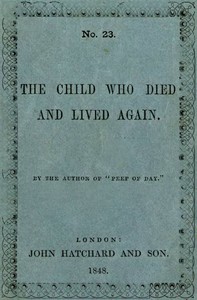
The Child Who Died and Lived Again — Reading Notes
Theology
4,355 recorded words. 0 minutes difference from this book's estimate.
View Gutenberg source #36614
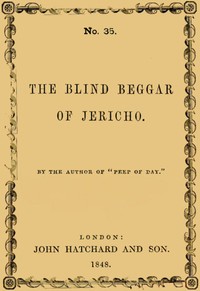
The catalog record for The Blind Beggar of Jericho — Inside the Classic provides practical reading context through 4,207 words, 19 min estimated reading time, and 1 detected text section.
The text analysis averages about 21.4 words per sentence, while the detected sections provide another way to judge how the source is divided.
Project Gutenberg metadata also associates the work with “Jesus Christ -- Miracles -- Juvenile literature,” connecting these edition facts with the source record’s subject description.
Explore this collection
These alternatives are selected using recorded categories and estimated reading time.
About 19 minutes
Theology
4,355 recorded words. 0 minutes difference from this book's estimate.
View Gutenberg source #36614About 19 minutes
Theology
4,153 recorded words. 0 minutes difference from this book's estimate.
View Gutenberg source #37611About 30 minutes
Theology
6,754 recorded words. 11 minutes difference from this book's estimate.
View Gutenberg source #35081Search stored excerpts and compare books → Choose by your preferences →
Choices use stored catalog measurements. Estimates vary with reading speed. A shared category is a catalog label, not a claim that two books have the same argument or literary quality.
Search reads excerpt text stored with this catalog and links to its associated Gutenberg record. The connection is stored in the site database; this tool does not recheck that every excerpt is word-for-word identical to that external record. Excerpt search does not cover every chapter and does not verify historical publication dates.
Catalog snapshot checked: 2026-09-26. Coverage: 94 public books, 94 available source excerpts.
Calculated from edition completeness, EPUB availability, text structure and catalogue metadata. Not a user rating.
Total of 100 points, scaled to a 2.5-5.0 range. Editions with an empty description or a missing EPUB file are not scored.
Public-domain source text
The source text is kept in the dedicated reader, separate from this catalogue record and its commentary.
Favell Lee Mortimer's The Blind Beggar of Jericho (1848) opens with a direct appeal to the child reader: "Do not you pity the blind?" This question immediately establishes the author's pedagogical method—using sensory loss to evoke sympathy and then redirecting that feeling toward spiritual reflection. The narrative follows the Gospel account closely but amplifies the beggar's desperation: he "cried out very loud" and kept crying out even when told to be quiet. Mortimer repeatedly stresses the beggar's physical vulnerability—he could not move in the crowd for fear of being "pushed down and trodden upon and crushed to death." Yet his voice becomes his instrument of faith. The story's tension hinges on the delay: Jesus "took no notice of him" at first, testing the man's persistence.
The blind beggar possesses no sight, no mobility, and no social standing. His sole resource is his voice. Mortimer emphasizes this by contrasting his physical helplessness with his vocal determination: "But he could speak." The crowd tries to silence him—"a great many people came up to him and told him not to make such a noise"—but he escalates, crying "more than ever." The author frames this persistence as the key to his deliverance. Notably, the beggar does not ask for sight initially; he simply cries "Have mercy on me, O Lord." Only when Jesus directly asks, "What do you wish me to do for you?" does the man specify his desire. This structure suggests that the primary act of faith is the cry for mercy itself, not the specific request.
Mortimer portrays the crowd in two opposing roles. First, they are a physical threat: the beggar "might have been pushed down and trodden upon and crushed to death" if he tried to move. They also act as social enforcers, telling him to be quiet. Yet once Jesus calls for the man, the crowd instantly transforms: "No one now was rude to the poor beggar, for Jesus had called for him." The same people who silenced him now make room. This reversal underscores the authority of Jesus's word—it reorders social dynamics instantly. The crowd's behavior mirrors the reader's potential response: initially dismissive of the persistent petitioner, then awed by divine attention. Mortimer uses this shift to model how human judgment yields to divine compassion.
Mortimer repeatedly breaks the narrative frame to speak directly to the child reader. After describing the beggar's healing, she writes: "The child who reads this book is not blind. If you were blind how could you read to father or to mother?" This move transforms the story from historical account into a personal lesson. The author then poses Jesus's question to the reader: "If he were to say, 'What do you wish me to do for you?' what would you answer?" She supplies a model response: "Forgive me my sins, and give me thy Holy Spirit." This catechetical approach aligns with the book's stated purpose as juvenile religious instruction. The reader is not merely to observe the beggar's faith but to replicate it in prayer, substituting spiritual blindness for physical.
Mortimer's narrative economy—just over 4,000 words—makes every element purposeful. The beggar's persistence, the crowd's hostility, and Jesus's delayed response form a pattern that invites the reader to see prayer as a vocal, insistent act. The author's direct questions and suggested answers turn the story into a template for personal devotion. Readers familiar with the Gospel account will notice Mortimer's additions: the emphasis on the beggar's fear of being crushed, the crowd's rudeness, and the explicit application to the child's own spiritual state. These choices reveal a writer deeply concerned with making biblical narrative immediately applicable to a young audience.
Sometimes I think about that beggar’s stubborn hope, and how easily the crowd’s noise drowned it out. Hosanna — Story, Setting & Ideas carries a quieter echo of that same longing, the kind that waits patiently at the roadside of a story. It feels less like reading and more like sitting with an old friend, remembering why we first believed. Hosanna — Story, Setting & Ideas has a way of lingering well after the page turns.
Save your reaction, strongest insight, and memorable passage.