About 206 minutes
The Potter and the Clay — A Reader’s Guide
Theology
47,195 recorded words. 6 minutes difference from this book's estimate.
View Gutenberg source #44291
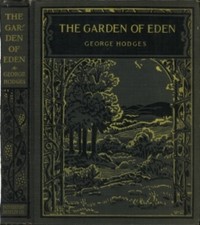
This digital edition of The Garden of Eden: Stories from the first nine books of the Old Testament — Edition Insights is described by source-level measurements including 45,996 words, 3 hr 20 min estimated reading time, and 6 detected text sections.
The text analysis averages about 17.7 words per sentence, while the detected sections provide another way to judge how the source is divided.
Project Gutenberg metadata also associates the work with “Bible stories, English -- Old Testament,” connecting these edition facts with the source record’s subject description.
Explore this collection
These alternatives are selected using recorded categories and estimated reading time.
About 206 minutes
Theology
47,195 recorded words. 6 minutes difference from this book's estimate.
View Gutenberg source #44291About 181 minutes
Theology
41,601 recorded words. 19 minutes difference from this book's estimate.
View Gutenberg source #34201About 178 minutes
Theology
40,789 recorded words. 22 minutes difference from this book's estimate.
View Gutenberg source #64743Search stored excerpts and compare books → Choose by your preferences →
Choices use stored catalog measurements. Estimates vary with reading speed. A shared category is a catalog label, not a claim that two books have the same argument or literary quality.
Search reads excerpt text stored with this catalog and links to its associated Gutenberg record. The connection is stored in the site database; this tool does not recheck that every excerpt is word-for-word identical to that external record. Excerpt search does not cover every chapter and does not verify historical publication dates.
Catalog snapshot checked: 2026-09-26. Coverage: 94 public books, 94 available source excerpts.
Calculated from edition completeness, EPUB availability, text structure and catalogue metadata. Not a user rating.
Total of 100 points, scaled to a 2.5-5.0 range. Editions with an empty description or a missing EPUB file are not scored.
Public-domain source text
The source text is kept in the dedicated reader, separate from this catalogue record and its commentary.
George Hodges opens his retelling of Old Testament stories with a domestic scene: Manoah and his wife, looking out over Philistine cornfields, wish for a son to defend them. The angel’s visit is reported through the wife’s excited, uncertain speech—she forgot to ask his name and didn’t know “whether he was a man or an angel.” This blend of the miraculous and the everyday sets the tone for the book.
Hodges writes in a plain, conversational style, adding invented dialogue and sensory details—the yellow cornfields, the sea along the sky, the honey from the lion’s carcass. The narrative moves briskly, with short paragraphs and direct speech, making the ancient stories feel immediate. The excerpts suggest a storyteller who prioritizes character and setting over doctrinal exposition.
Hodges fills his retelling with small, concrete details that root the biblical events in everyday life. In the Samson story, Manoah’s wife is frightened by the angel’s visit and forgets to ask his name—a human touch not in the original text. The angel’s instructions about raising the child are practical: “Let neither the mother nor the child taste either grapes or wine, and never let his hair be cut.”
Later, when Samson kills the lion, Hodges notes that he “caught the lion and killed him with his hands,” emphasizing physical strength. The wedding riddle scene includes the custom of guests trying to guess within seven days, with a prize of “a shirt and a suit of clothes.” These additions make the story feel like a folktale, with clear stakes and relatable characters.
The setting is consistently described in terms of agricultural and natural features. The land of the Philistines is “miles and miles of yellow cornfields, with vineyards here and there, and groves of olive trees.” The hill where Manoah lives overlooks the sea. This pastoral landscape recurs throughout the excerpts, grounding the action in a specific, fertile region.
Hodges uses the landscape to underscore conflict: the Philistines possess the fair country, and the Israelites are afraid. The description of Samson’s hair—braided in “seven big braids hanging down his back”—ties his strength to his appearance, which is also part of the natural world. The lion’s carcass becomes a source of honey, a detail that bridges the wild and the domestic.
Hodges relies heavily on direct speech to advance the plot and reveal character. Manoah and his wife speak to each other in longing: “Oh, that we had a good stout son to defend us against our enemies in our old age!” The angel’s dialogue is terse and authoritative, while Samson’s riddle is presented as a direct quote: “Out of the eater came forth meat, and out of the strong came forth sweetness.”
The wedding guests’ attempts to guess the riddle are summarized rather than quoted, keeping the focus on Samson’s cleverness. The dialogue often carries emotional weight—Manoah’s wife is “so frightened” she forgets details, and Manoah asks earnestly, “Let thy words come to pass.” This technique makes the characters feel immediate and their concerns personal.
The excerpts show a deliberate pacing: the angel’s visit is spread over two days, with the wife calling her husband the second time. The birth of Samson is compressed into “days passed and days passed,” then his childhood is summarized in a few sentences. The narrative lingers on key moments—the angel’s disappearance, the lion killing, the riddle—while skipping over years.
This selective focus suggests Hodges aims to highlight dramatic turning points. The table of contents reveals a similar pattern: each chapter covers a single episode or figure, from “The Garden of Eden” to “The Witch of Endor.” The book covers the first nine books of the Old Testament but chooses vivid, self-contained stories, much like a collection of folktales.
As you read, notice how Hodges balances fidelity to the biblical outline with his own imaginative additions. The domestic details and invented dialogue are not in the original text, but they serve to humanize the characters. The landscape descriptions create a consistent world. The book is best approached as a storyteller’s version, not a scholarly commentary—one that prioritizes narrative momentum and emotional clarity over theological depth.
Reading about Samson’s domestic ruin, I remembered sitting on my grandmother’s porch, feeling the same heaviness in another book’s pages—how God feels far when we’ve made a mess of things. That old companion, What and Where is God? A Human Answer to the Deep Religious Cry of the Modern Soul — Reading Companion, whispered the same quiet truth: He’s still near, even in the rubble.
Create a short personal record of your experience with this book.