
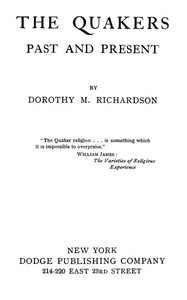
The Quakers, Past and Present by Dorothy M. Richardson
Dorothy M. Richardson, better known for her groundbreaking modernist novel Pilgrimage, turns her sharp, observant eye to a different subject here. The Quakers, Past and Present is her attempt to explain who the Quakers are, not through dates and doctrines, but through the spirit of their community and their impact on the world.
The Story
There isn't a plot in the traditional sense. Instead, Richardson builds a picture. She starts with the fiery origins of the Quakers under George Fox in a turbulent England, where their refusal to tip their hats to social superiors or participate in state churches landed them in jail. She then guides us through their evolution. We see how their belief in that of God in every person led them to pioneer ideas we now take for granted: equal speaking rights for women in worship, opposition to slavery, and humane treatment for the mentally ill. Richardson shows them not as saints, but as practical, stubborn, and deeply principled people trying to live out their faith in everyday actions, from business to family life.
Why You Should Read It
I loved this because it reads like an invitation. Richardson isn't a distant historian; she's a contemporary observer who admires the Quaker commitment to integrity. She makes their history feel urgent. When she describes their silent meetings, where anyone moved by the Spirit can speak, you feel the potential and tension in that quiet room. Her focus is on their lived ethics—how a belief translates into refusing to make swords or advocating for kinder prisons. It's a powerful reminder that profound change often starts with simple, consistent refusal to compromise on core principles. She captures the beauty of their quiet steadfastness.
Final Verdict
This book is perfect for anyone interested in the quiet threads of history that weave into our present. It's for the reader who enjoys biographies of ideas and movements. You don't need to be religious to appreciate it; Richardson presents the Quakers as a fascinating sociological study in peaceful resistance and community building. If you've ever asked, 'But what did they actually do?' about a religious group, this is your answer. It’s a short, clear, and surprisingly moving portrait of a group who believed their faith required them to mend the world, and quietly set about doing it.
Liam Hernandez
1 year agoA bit long but worth it.
Margaret Nguyen
1 year agoI didn't expect much, but the depth of research presented here is truly commendable. Exactly what I needed.
Barbara Miller
11 months agoThis book was worth my time since the storytelling feels authentic and emotionally grounded. This story will stay with me.
Mary Robinson
1 year agoHonestly, it challenges the reader's perspective in an intellectual way. Thanks for sharing this review.







Aiden Hill
1 year agoGreat read!