About 429 minutes
Angelic Wisdom Concerning the Divine Love and the Divine Wisdom — Key Ideas to Explore
Theology
98,636 recorded words. 4 minutes difference from this book's estimate.
View Gutenberg source #16627
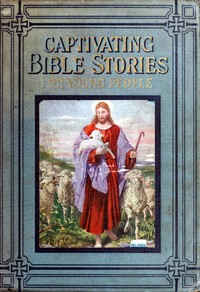
Captivating Bible Stories for Young People, Written in Simple Language — Reading Notes can be approached with a clearer sense of reading commitment from its source measurements: 97,561 words, 7 hr 5 min estimated reading time, and 62 detected text sections.
The text analysis averages about 15.8 words per sentence, while the detected sections provide another way to judge how the source is divided.
Project Gutenberg metadata also associates the work with “Bible stories, English,” connecting these edition facts with the source record’s subject description.
Explore this collection
These alternatives are selected using recorded categories and estimated reading time.
About 429 minutes
Theology
98,636 recorded words. 4 minutes difference from this book's estimate.
View Gutenberg source #16627About 440 minutes
Theology
101,017 recorded words. 15 minutes difference from this book's estimate.
View Gutenberg source #38960About 409 minutes
Theology
93,958 recorded words. 16 minutes difference from this book's estimate.
View Gutenberg source #68742Search stored excerpts and compare books → Choose by your preferences →
Choices use stored catalog measurements. Estimates vary with reading speed. A shared category is a catalog label, not a claim that two books have the same argument or literary quality.
Search reads excerpt text stored with this catalog and links to its associated Gutenberg record. The connection is stored in the site database; this tool does not recheck that every excerpt is word-for-word identical to that external record. Excerpt search does not cover every chapter and does not verify historical publication dates.
Catalog snapshot checked: 2026-09-26. Coverage: 94 public books, 94 available source excerpts.
Calculated from edition completeness, EPUB availability, text structure and catalogue metadata. Not a user rating.
Total of 100 points, scaled to a 2.5-5.0 range. Editions with an empty description or a missing EPUB file are not scored.
Public-domain source text
The source text is kept in the dedicated reader, separate from this catalogue record and its commentary.
Charlotte M. Yonge's Captivating Bible Stories for Young People opens with a preface that frames the work as a response to a felt need for a carefully written scriptural narrative for children. The book is structured as fifty-two lessons, each containing three readings for every Sabbath of the year, followed by a series of questions. The excerpts reveal a consistent authorial voice that treats biblical events as immediate moral lessons, often drawing explicit parallels between the experiences of biblical figures and the daily lives of young readers.
Yonge frequently breaks the narrative frame to address the reader directly. In the lesson on Ezekiel, she writes, “Now when we have done wrong, and are punished, it is to make us sorry, that we may do so no more.” This shift from third-person storytelling to first-person plural (“we”) collapses the distance between ancient Israel and the child reader. The author does not simply recount events; she interprets them as templates for personal conduct. The questions at the end of each reading reinforce this: “Why are people punished?” and “What is the way to be forgiven?” are not about biblical characters but about the reader’s own moral life.
Yonge uses vivid, simplified geography to make the exile tangible. She describes Babylon as “the dull flat land, with the streams of water flowing lazily through it,” in contrast to “their own dear hills and fields.” This binary opposition—flat versus hilly, lazy versus dear—creates an emotional landscape that a child can grasp. The repetition of “dear” for home and “flat” for exile emphasizes loss without complex historical detail. Similarly, in the lesson on the fall of Jerusalem, she notes that only a few Jews remained “with their king Zedekiah at Jerusalem,” while the rest were “carried away out of their beautiful hilly land of Canaan.” The adjectives do more than describe; they judge.
The excerpts show a deliberate use of repetition to drive home key points. In the Ezekiel lesson, the phrase “really sorry” appears three times in close succession: “they must really be sorry in earnest, not only pretend to be sorry”; “if they were really sorry, and really prayed to Him”; “they should be really sorry, and leave off all the bad things.” This triple iteration mirrors the three-reading structure of each lesson. The same pattern recurs in the question set, where “sorry” appears in questions 11, 12, 14, and 15. Yonge’s prose is not merely simple; it is pedagogically engineered, using redundancy to ensure the moral sticks.
Each reading concludes with a series of questions that guide the reader toward a specific interpretation. The questions are not open-ended; they presuppose a correct answer derived from the preceding text. For example, after the Ezekiel reading, question 11 asks, “Why are people punished?” and the text has already supplied the answer: “to make us sorry, that we may do so no more.” The questions also move from factual recall (“What was happening to Jerusalem?”) to personal application (“What should we do if we are punished?”). This structure transforms the reading from passive reception into an active catechism, training the child to internalize the lesson’s moral framework.
Yonge’s authorial choices—direct address, sensory contrasts, repetition, and catechetical questions—work together to create a text that is less a storybook and more a devotional manual. Readers should approach each lesson as a guided exercise in moral reasoning, where the biblical narrative serves primarily as a vehicle for personal instruction. The illustrations by Julius Schnorr von Carolsfeld, mentioned in the title page, likely reinforce this pedagogical aim, though the excerpts do not describe them.
I found myself thinking of that old Bible storybook, the gentle way it made repentance feel like a quiet homecoming rather than a scolding, and it brought to mind a smaller, plainer companion volume on my shelf—A Bible Hand-Book — Reading Notes—with its tidy margins and unhurried questions. Some books simply belong beside one another, like old friends who nod in recognition.
Use these questions to collect your thoughts before moving on.