About 20 minutes
The Story of the Prophet Jonas — Reading Notes
Sermons Devotion
4,546 recorded words. 19 minutes difference from this book's estimate.
View Gutenberg source #12076
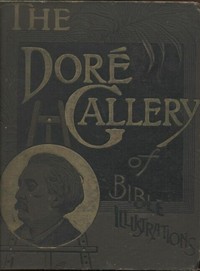
The Doré Bible Gallery, Volume 3 — Inside the Classic can be approached with a clearer sense of reading commitment from its source measurements: 8,859 words, 39 min estimated reading time, and 2 detected text sections.
The text analysis averages about 25.1 words per sentence, while the detected sections provide another way to judge how the source is divided.
Project Gutenberg metadata also associates the work with “Bible -- Illustrations,” connecting these edition facts with the source record’s subject description.
Explore this collection
These alternatives are selected using recorded categories and estimated reading time.
About 20 minutes
Sermons Devotion
4,546 recorded words. 19 minutes difference from this book's estimate.
View Gutenberg source #12076About 122 minutes
Sermons Devotion
28,028 recorded words. 83 minutes difference from this book's estimate.
View Gutenberg source #36444About 176 minutes
Sermons Devotion
40,413 recorded words. 137 minutes difference from this book's estimate.
View Gutenberg source #28103Search stored excerpts and compare books → Choose by your preferences →
Choices use stored catalog measurements. Estimates vary with reading speed. A shared category is a catalog label, not a claim that two books have the same argument or literary quality.
Search reads excerpt text stored with this catalog and links to its associated Gutenberg record. The connection is stored in the site database; this tool does not recheck that every excerpt is word-for-word identical to that external record. Excerpt search does not cover every chapter and does not verify historical publication dates.
Catalog snapshot checked: 2026-09-26. Coverage: 94 public books, 94 available source excerpts.
Calculated from edition completeness, EPUB availability, text structure and catalogue metadata. Not a user rating.
Total of 100 points, scaled to a 2.5-5.0 range. Editions with an empty description or a missing EPUB file are not scored.
Public-domain source text
The source text is kept in the dedicated reader, separate from this catalogue record and its commentary.
Gustave Doré’s engravings for this volume were selected, according to the editor, with “special reference to the known taste of the American people,” focusing on the most familiar scriptural events. The accompanying letter-press provides a brief narrative analysis of each design. The excerpts reveal a consistent pattern: Doré’s compositions emphasize physical action and emotional intensity—Ruth gleaning among the reapers, the Philistines’ golden mice and emerods, and Jonathan’s covenant with David. The editor’s preface claims Doré “raised illustrative art to a dignity and importance before unknown,” and the plates indeed treat biblical scenes with the scale and drama of history painting.
The excerpt from Ruth 2 shows a scene of careful social ritual. Boaz instructs his young men to “let fall also some of the handfuls of purpose for her”—a deliberate act of charity disguised as accident. Doré’s illustration likely captures the moment of Ruth sitting beside the reapers, with Boaz reaching her “parched corn.” The text emphasizes sufficiency: “she did eat, and was sufficed, and left.” The editor’s note probably highlights the contrast between Ruth’s humility and Boaz’s commanded generosity. The engraving would render the harvest field as a space of hierarchical yet benevolent order, with the gleaner’s posture signaling dependence and gratitude.
The Philistines’ response to the ark’s presence is strikingly pragmatic: they consult priests and diviners, then craft trespass offerings of “five golden emerods, and five golden mice.” The narrative tests divine agency by sending the ark on a cart pulled by unyoked cows, whose calves are kept at home. The cows “took the straight way … lowing as they went, and turned not aside.” Doré’s engraving would likely emphasize the anomalous obedience of the animals and the solemn procession of Philistine lords. The editor’s text notes the “plague” and the “images of your emerods,” grounding the supernatural in tangible, even grotesque, objects. The scene at Beth-shemesh—reapers lifting their eyes, the cart stopping at a great stone—provides a compositional focal point for Doré’s characteristic interplay of human figures and monumental landscape.
The bond between Jonathan and David is described in terms of physical and symbolic exchange: “Jonathan stripped himself of the robe that was upon him, and gave it to David, and his garments, even to his sword.” The editor’s note would likely interpret this as a transfer of status and loyalty. Doré’s illustration probably depicts the moment of covenant, with Jonathan’s gesture of disrobing and David’s receipt of the arms. The text emphasizes the emotional intensity: “the soul of Jonathan was knit with the soul of David.” The engraving would contrast the two figures—Jonathan, the prince, voluntarily divesting himself of royal insignia, and David, the shepherd-warrior, accepting them. The scene sets up the later tensions with Saul, though the excerpt does not extend to that conflict.
Readers approaching this volume should attend to how Doré’s compositions translate biblical narrative into visual drama—the placement of figures, the rendering of landscape, and the choice of moment. The editor’s letter-press, though brief, often highlights the moral or providential significance of each scene. Comparing the engravings with the biblical text reveals Doré’s interpretive decisions: which gestures to emphasize, which details to include or omit. This volume offers a nineteenth-century visual commentary on Scripture, shaped by both artistic ambition and popular piety.
Doré’s engravings of Saul and David feel so heavy with waiting—God’s silence pressing down like weather. It reminded me of that quiet ache in The Story of the Prophet Jonas — Reading Notes, where even a reluctant heart gets caught in the vast, merciful pause between prayers. I keep turning both over slowly, like stones warmed by the sun.
Your answers remain private and are stored only in this browser.