About 324 minutes
Plain Parochial Sermons, preached in the Parish Church of Bolton-le-Moors — Reading Notes
Theology
74,338 recorded words. 6 minutes difference from this book's estimate.
View Gutenberg source #62223
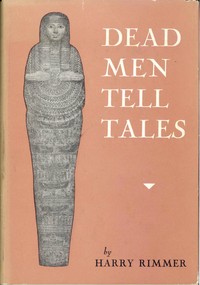
For Dead Men Tell Tales — Context and Discussion, the stored edition analysis reports 75,736 words, 5 hr 30 min estimated reading time, and 10 detected text sections.
The text analysis averages about 22.7 words per sentence, while the detected sections provide another way to judge how the source is divided.
Project Gutenberg metadata also associates the work with “Bible. Old Testament -- Evidences, authority, etc.,” connecting these edition facts with the source record’s subject description.
Explore this collection
These alternatives are selected using recorded categories and estimated reading time.
About 324 minutes
Theology
74,338 recorded words. 6 minutes difference from this book's estimate.
View Gutenberg source #62223About 338 minutes
Theology
77,638 recorded words. 8 minutes difference from this book's estimate.
View Gutenberg source #60553About 342 minutes
Theology
78,496 recorded words. 12 minutes difference from this book's estimate.
View Gutenberg source #59991Search stored excerpts and compare books → Choose by your preferences →
Choices use stored catalog measurements. Estimates vary with reading speed. A shared category is a catalog label, not a claim that two books have the same argument or literary quality.
Search reads excerpt text stored with this catalog and links to its associated Gutenberg record. The connection is stored in the site database; this tool does not recheck that every excerpt is word-for-word identical to that external record. Excerpt search does not cover every chapter and does not verify historical publication dates.
Catalog snapshot checked: 2026-09-26. Coverage: 94 public books, 94 available source excerpts.
Calculated from edition completeness, EPUB availability, text structure and catalogue metadata. Not a user rating.
Total of 100 points, scaled to a 2.5-5.0 range. Editions with an empty description or a missing EPUB file are not scored.
Public-domain source text
The source text is kept in the dedicated reader, separate from this catalogue record and its commentary.
Harry Rimmer opens Dead Men Tell Tales by directly challenging the old axiom that “Dead men tell no tales,” asserting instead that modern archaeology has made the tombs of antiquity vocal. The book’s foreword establishes a distinctive authorial voice: Rimmer writes as both a scientist and a believer, describing the Bible as best read “in the light that is reflected upon its pages from the blade of a spade.” This metaphor—the spade as a source of illumination—recurs throughout the text, signaling Rimmer’s method of treating physical artifacts as evidence that corroborates Scripture. The work is the fourth volume in the John Laurence Frost Memorial Library, and Rimmer positions it as an apologetic, not a general history.
Rimmer’s prose consistently frames archaeological tools as instruments of revelation. In the foreword, he draws an explicit parallel: “Just as the microscope is the instrument for the study of biology, and the spectroscope has become the means of study in physics, so the Bible is best read today in the light that is reflected upon its pages from the blade of a spade.” This analogy does more than introduce a method; it establishes a hierarchy of evidence. Rimmer treats the spade as a corrective to older, purely literary approaches to Scripture. The diction is deliberate: “reflected” suggests that archaeology does not replace the Bible but clarifies it. Throughout the excerpts, Rimmer avoids speculative language when describing finds. He reports the dimensions of Ahab’s palace (“between seven and eight acres in extent”) and the number of ostraca (“seventy-five”) with precision, lending his argument an air of empirical rigor.
Rimmer’s treatment of the ivory palace of Ahab reveals his preference for concrete, visual detail. He notes that the walls were “decorated with ivory carvings” and that “much of the furniture was inlaid with ivory.” The description of an ivory lion—photographed and magnified four times—is used to argue that “the lines and perfection of the carving cannot be excelled by any craftsman today.” This appeal to craftsmanship is characteristic: Rimmer often lets the artifact’s quality speak for itself. He also cites expedition leaders by name (Dr. Reisner, the Harvard expedition) and quotes their praise (“the most charming example of miniature art ever found on an Israelite site”). The effect is to layer his own authority with that of professional archaeologists. When he turns to the Moabite Stone, he reproduces a lengthy inscription from Mesha, allowing the ancient king’s own words to carry the argument about the historicity of Ahab’s reign.
Rimmer does not shy away from discrepancies between archaeological and biblical records. He notes that the Moabite Stone states Ahab reigned forty years, while “the Scripture record, however, makes his reign to be twenty-two years.” Rather than dismissing the stone, he uses it to reconstruct a more complex timeline: after Ahab’s death, his son Jehoram reigned twelve years, and Mesha rebelled during that weaker reign. Rimmer’s handling of this contradiction is instructive. He does not claim the Bible is inerrant in every numerical detail; instead, he treats the stone as a contemporary witness that confirms the broader political reality of Israelite-Moabite relations. The phrase “according to the credible chronology of II Kings” shows his willingness to weigh sources. This section of the book models a method: archaeological evidence can correct or supplement biblical chronology without undermining its essential historicity.
Rimmer’s central metaphor—that dead men tell tales through an “archeological resurrection”—shapes the book’s entire rhetorical strategy. He writes that “the tongueless tombs of the distant past have suddenly become vocal, and this mighty chorus of the dead great has forced us to revise many of our once cherished opinions.” The language is dramatic but not fanciful; Rimmer grounds it in specific finds. The “chorus” includes Mesha’s stele, the Samaria ivories, and the ostraca that record “the homely affairs of the daily life of Ahab’s time.” By personifying artifacts, Rimmer makes them active witnesses in a courtroom-like argument for biblical reliability. His diction—words like “evidence,” “testimony,” and “record”—reinforces this legalistic frame. The book is structured as a case, with each chapter presenting a new exhibit. Rimmer’s authorial stance is that of a prosecutor who lets the exhibits speak, but his selection and framing are unmistakably apologetic.
Readers should approach Dead Men Tell Tales as a period piece of evangelical archaeology, notable for its confident synthesis of scientific and religious language. Rimmer’s voice is that of a popularizer who trusts his audience to follow detailed descriptions of excavations and inscriptions. The book rewards attention to its rhetorical moves—how it turns a spade into a lens, an artifact into a witness, and a discrepancy into a clue. For those interested in the history of biblical apologetics, it offers a clear example of how archaeological evidence was marshaled in the early twentieth century to defend the Old Testament’s historical claims.
Reading about Rimmer hearing the Moabite Stone speak reminded me of evenings in my grandfather’s study, where relics were never silent. That same hush fell over me once with Islâm — A Closer Reading, which treated old manuscripts as patient witnesses rather than arguments. Both books let dust-covered things murmur, and I sit quietly, just listening. Islâm — A Closer Reading carried that particular weight, like a familiar scent from a room I thought I’d forgotten.
Capture what you thought, learned, and would like to remember.